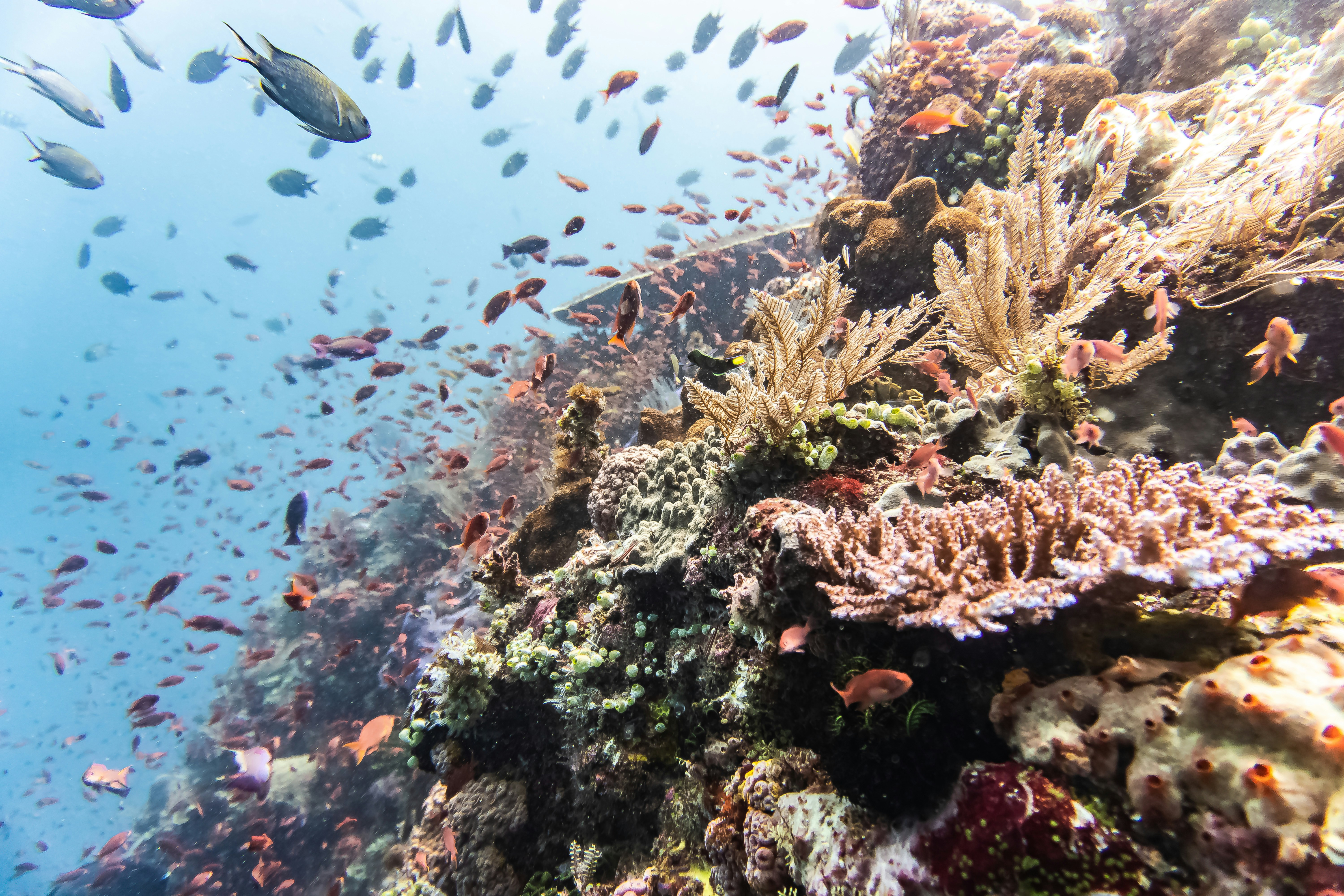
A study of no-take marine reserves on the Great Barrier Reef finds fully protected zones support more than three times the biomass of targeted fish species compared to open fishing zones.
Marine Protected Areas (MPAs) are the cornerstone of ocean conservation policy. The global community has committed to protecting 30% of the ocean by 2030 under the "30x30" framework. But rigorous monitoring reveals a more complicated picture than the headline numbers suggest.
A study published in Coral Reefs (Hall, Sievers & Kingsford, 2023, DOI: 10.1007/s00338-022-02340-w) examined the conservation outcomes of fully protected (no-take) zones, partially protected zones, and open fishing zones on inshore fringing reefs of the Great Barrier Reef. The research provides some of the clearest evidence yet for the effectiveness of strict marine reserves.
The results were striking: fully protected zones supported more than three times the biomass of highly targeted coral trout (Plectropomus spp.) compared to open fishing zones, and more than twice the biomass observed in partially protected zones. Similar outcomes occurred for primary target fish collectively. Structural complexity of reef habitat was identified as a consistent positive driver of fish biomass across all protection levels.
The critical variable is enforcement. "Paper parks" — MPAs that exist on maps but receive no active management — show no measurable ecological difference from unprotected areas. The researchers found that effective enforcement requires sustained investment, a threshold that many developing nations struggle to meet.
Community involvement has emerged as a strong predictor of long-term success. MPAs co-managed with local fishing communities show higher compliance rates, lower poaching incidence, and greater ecological recovery than those managed exclusively by government agencies. In the Philippines, community-managed MPAs in the Coral Triangle have become global models, combining traditional fishing knowledge with modern monitoring technology.
Climate change is also undermining MPA effectiveness in some regions. As species shift their ranges in response to warming, populations that were once protected inside MPA boundaries are moving outside them. Dynamic MPAs — whose boundaries adjust based on real-time species distribution data — are being piloted as a potential solution, though the regulatory challenges are significant.
Sources & Attribution
This article is based on published research and official reports from credible marine science institutions. Full credit goes to the original authors and organizations listed below.
- 1Hall, Sievers & Kingsford (2023) — Conservation benefits of no-take marine reserves outweigh modest benefits of partially protected areas (Coral Reefs)
Hall, A.E., Sievers, K.T., & Kingsford, M.J. (2023). Conservation benefits of no-take marine reserves outweigh modest benefits of partially protected areas for targeted coral reef fishes. Coral Reefs, 42, 319–333. https://doi.org/10.1007/s00338-022-02340-w
- 2NOAA — Marine Protected Areas of the United States
NOAA. (2024). Marine Protected Areas of the United States. National Oceanic and Atmospheric Administration.