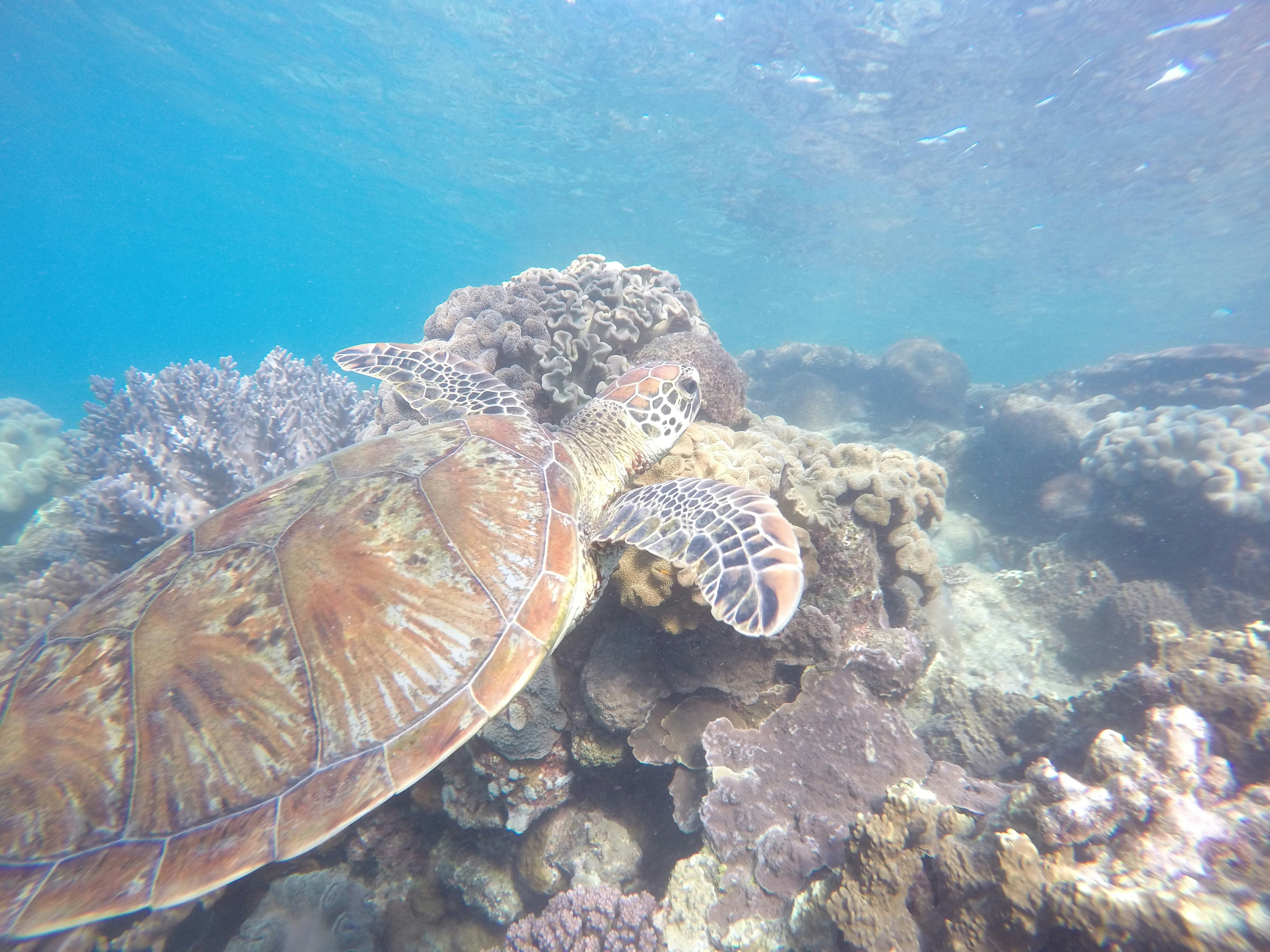
Loggerhead turtles can learn the magnetic signatures of specific oceanic locations and use them as a map — providing the first experimental evidence that animals can learn magnetic map cues.
A loggerhead sea turtle hatches on a Florida beach, scrambles to the ocean, and disappears into the Atlantic. Twenty years later, it returns to lay its own eggs — not just to the same beach, but often within meters of where it was born. How does it find its way across thousands of miles of open ocean?
The answer lies in one of nature's most sophisticated navigation systems: magnetic imprinting. A landmark study published in Nature (Lohmann et al., 2025, DOI: 10.1038/s41586-024-08554-y) provides the first experimental evidence that loggerhead turtles (Caretta caretta) can learn the magnetic signatures of specific oceanic locations and use them as a navigational map.
In the experiments, juvenile turtles were fed repeatedly in magnetic fields replicating those that exist in particular oceanic locations. The turtles learned to distinguish magnetic fields in which they encountered food from magnetic fields that exist elsewhere — demonstrating an ability that may underlie foraging site fidelity and natal beach homing throughout their lives.
The study also revealed that two different mechanisms of magnetoreception underlie the magnetic map and magnetic compass in sea turtles. Conditioned responses in the magnetic map assay were unaffected by radiofrequency oscillating magnetic fields — a treatment expected to disrupt radical-pair-based chemical magnetoreception — suggesting the magnetic map sense relies on a different mechanism, likely magnetite-based. By contrast, orientation behavior requiring the magnetic compass was disrupted by radiofrequency fields.
This discovery has significant conservation implications. Sea turtle nesting beaches are threatened by coastal development, rising sea levels, and increased storm intensity driven by climate change. If nesting beaches are lost, turtles cannot simply relocate — they are neurologically bound to return to their birth site's magnetic signature. Conservation efforts must therefore prioritize protecting existing nesting beaches rather than assuming turtles will adapt to new locations.
Researchers are also investigating whether magnetic navigation is disrupted by human-generated electromagnetic fields from submarine cables and offshore wind farms — a question with urgent relevance as ocean infrastructure expands rapidly.
Sources & Attribution
This article is based on published research and official reports from credible marine science institutions. Full credit goes to the original authors and organizations listed below.
- 1Lohmann et al. (2025) — Learned magnetic map cues and two mechanisms of magnetoreception in turtles (Nature)
Lohmann, K.J., Goforth, K.M., Mackiewicz, A.G., Lim, D.S., & Lohmann, C.M.F. (2025). Learned magnetic map cues and two mechanisms of magnetoreception in turtles. Nature. https://doi.org/10.1038/s41586-024-08554-y
- 2NOAA Fisheries — Sea Turtle Conservation
NOAA Fisheries. (2024). Sea Turtle Conservation. National Oceanic and Atmospheric Administration.