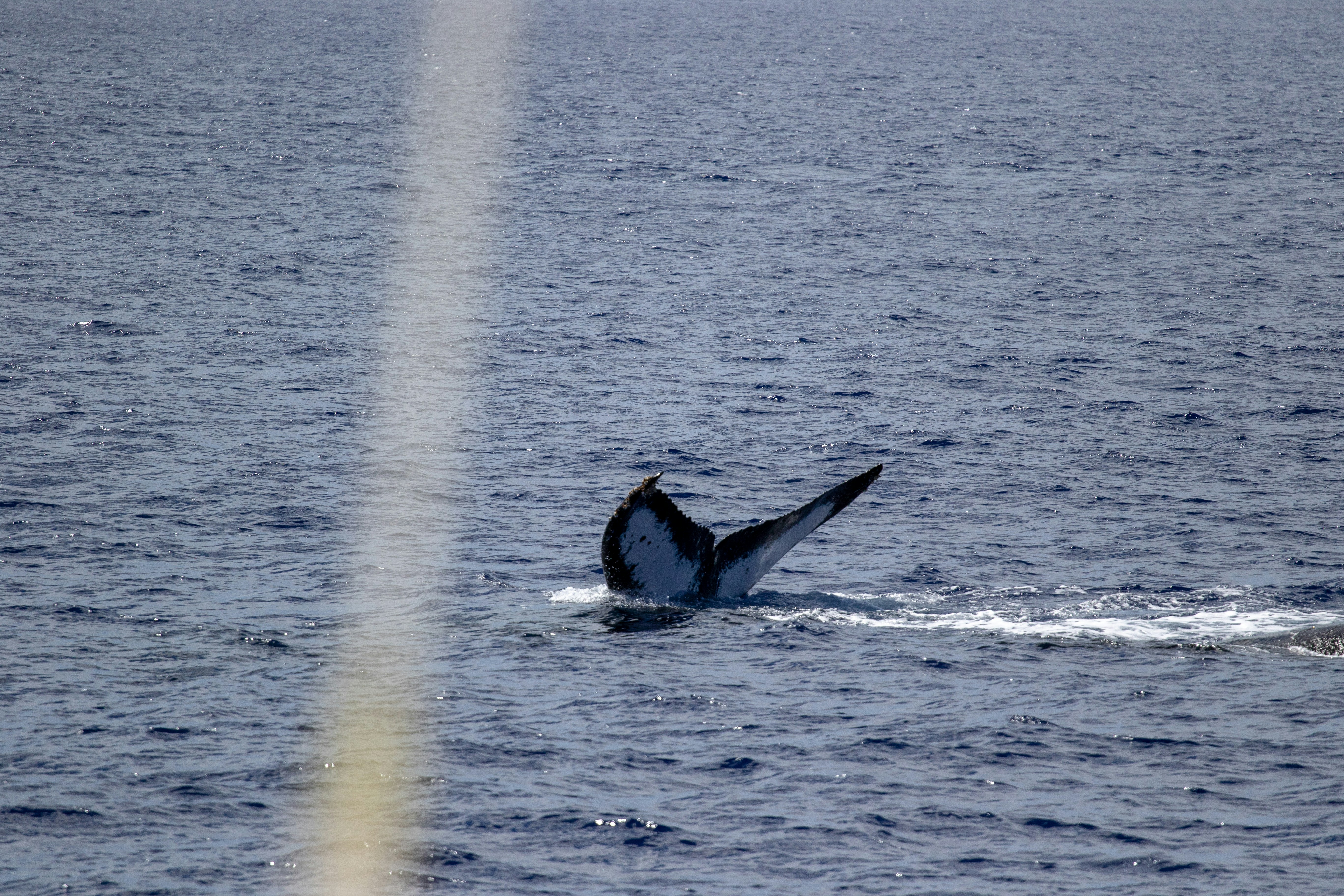
NOAA Fisheries uses acoustic monitoring, satellite tagging, and machine learning to track humpback whale migration — helping predict seasonal movements and reduce ship strikes.
For decades, marine biologists tracked whale migrations using satellite tags and acoustic monitoring — painstaking work that produced fragmented data. Artificial intelligence is now transforming this field, revealing migration patterns of extraordinary complexity.
NOAA Fisheries employs a combination of satellite telemetry, passive acoustic monitoring, and machine learning to study humpback whale (Megaptera novaeangliae) movements across the Pacific and Atlantic. These tools allow researchers to correlate whale movement data with sea surface temperature, chlorophyll concentrations (a proxy for prey availability), and ocean current patterns — building predictive models of where whale aggregations will form weeks in advance.
Humpback whales undertake some of the longest migrations of any mammal on Earth, traveling up to 16,000 miles round-trip between tropical breeding grounds and polar feeding areas. In the North Pacific, populations migrate between Hawaiian and Alaskan waters. In the North Atlantic, whales travel between Caribbean breeding grounds and feeding areas off New England, Canada, Iceland, and Norway.
Ship strike is one of the leading causes of large whale mortality. Using real-time tracking data and predictive models, NOAA Fisheries has developed Dynamic Management Areas (DMAs) — voluntary vessel speed restrictions that activate when whales are detected in shipping lanes. This approach has been applied to protect both humpback and endangered North Atlantic right whales.
Research published through the PLOS ONE journal documented the use of automated photo-identification matching systems to track humpback whale interchanges across Japanese waters, demonstrating how AI-assisted identification is revealing previously unknown movement patterns (Naessig et al., 2022, DOI: 10.1371/journal.pone.0277761).
Climate change is also altering migration timing. Humpbacks in the North Pacific are tracking the northward shift of krill populations as Arctic waters warm, arriving at summer feeding grounds earlier than historical baselines. Understanding these shifts is critical for ensuring that protected areas and shipping lane regulations remain effective as the ocean changes.
Sources & Attribution
This article is based on published research and official reports from credible marine science institutions. Full credit goes to the original authors and organizations listed below.
- 1NOAA Fisheries — Humpback Whale Conservation & Management
NOAA Fisheries. (2024). Humpback Whale: Conservation Management. National Oceanic and Atmospheric Administration.
- 2Naessig et al. (2022) — Humpback whale interchanges in Japanese waters using automated matching (PLOS ONE)
Naessig, P.J., et al. (2022). Interchanges and movements of humpback whales in Japanese waters: Okinawa, Ogasawara, Amami, and Hokkaido, using an automated matching system. PLOS ONE, 17(12), e0277761.
- 3NOAA Fisheries — Humpback Whale Species Overview
NOAA Fisheries. (2024). Humpback Whale. National Oceanic and Atmospheric Administration.